KOPEKOBA
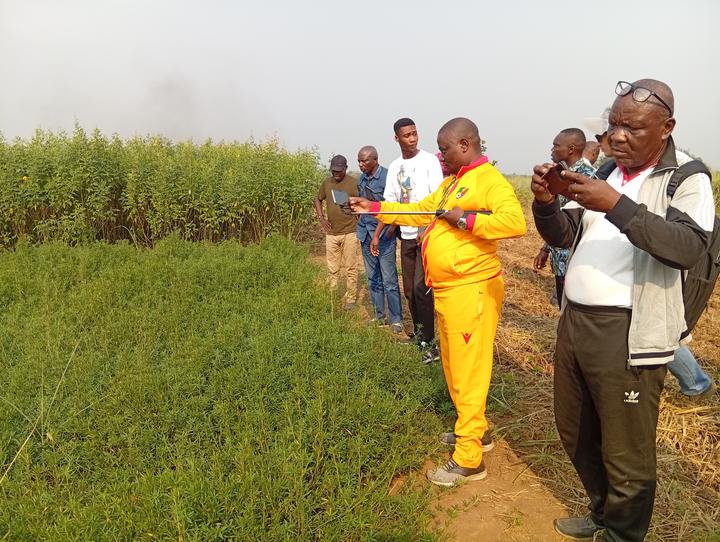
The Investment Programme of the Sustainable Land Use Programme (or Kopekoba) supports the Republic of Congo in its transition towards a low-carbon economy, while reconciling sustainable agricultural development, the conservation of natural resources, and improved rural livelihoolds. The term ‘Kopekoba’ comes from the Lingala expression ‘Kolona Pe Kobatela’, meaning ‘to cultivate and protect’. More specifically, the programme aims to reduce deforestation, particularly that associated with slash-and-burn agriculture and uncontrolled fuelwood exploitation, while diversifying the national economy beyond its dependence on hydrocarbons. In this context, the Kopekoba programme adopts an integrated approach to sustainable development. It promotes sustainable agricultural intensification, in line with national land-use planning strategies, while supporting investments by stakeholders involved in two value chains: climate-smart agriculture (CSA) and zero-deforestation agriculture (ZDA). The programme also seeks to establish a sustainable supply of fuelwood in the cities of Brazzaville and Pointe-Noire. Finally, it includes the development of monitoring and evaluation mechanisms to track the results of projects funded by the Kopekoba programme and to guide the future development of CSA and ZDA towards the most effective practices.
Frédéric Baudron
Systems Agronomist
My research interests include farming system research, sustainable intenification, agriculture-biodiversity nexus, appropriate mechanization, participatory innovation development, agronomy-to-scale, and roots and tubers.