Know your men and women farmers: Ensuring host farmers in participatory trials represent heterogeneity within the target environment
Abstract
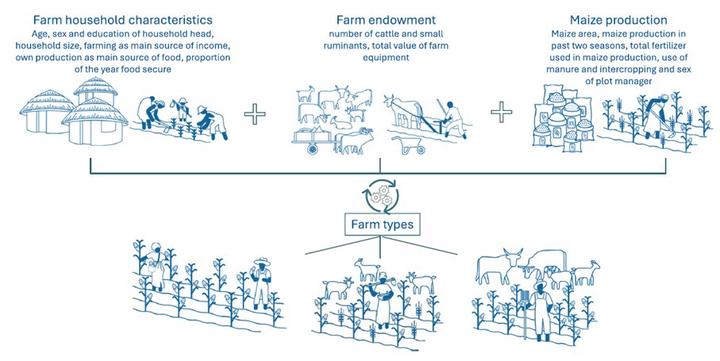
There is growing interest in participatory varietal selection and gender-responsive breeding in research and development initiatives. On-farm testing is increasingly used to ensure that new varieties perform within the target environments. However, there are few established approaches for selecting host women and men farmers who reflect the diversity of the overall target population of smallholder farmers. This study sought to evaluate ex-post if recruited farmers within a participatory breeding network in Zimbabwe were representative of the surveyed population and pilot an approach to developing comprehensive farm typologies to ensure more gender-responsive and socially inclusive breeding. • A sample of over 2,000 randomly selected women and men farmers, including those hosting breeding trials, were surveyed. A typology was constructed to group farms with similar characteristics associated with household demographics, maize production and resource endowments. This facilitated the subsample of trialhosting farmers characteristics to be compared with the broader typology.